


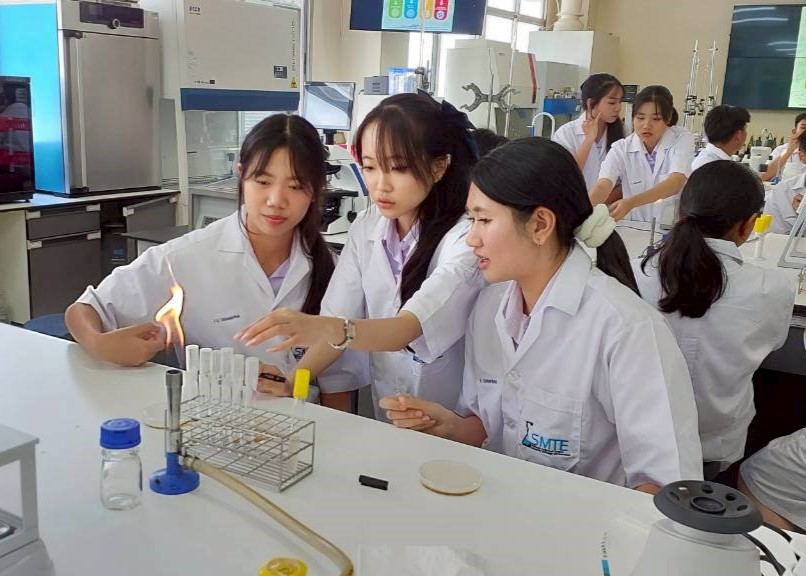
คณะอุตสาหกรรมเกษตร มช. ร่วมสร้างนักนวัตกรเยาวชน ให้กับนักเรียนโรงเรียนพะเยาพิทยาคม ผ่านกิจกรรม SMTE Science Camp
คณะอุตสาหกรรมเกษตร มหาวิทยาลัยเชียงใหม่ จัดกิจกรรม SMTE Science Camp: From Theory to Real Lab ให้กับนักเรียนโครงการห้องเรียนพิเศษวิทยาศาสตร์ คณิตศาสตร์ เทคโนโลยี และสิ่งแวดล้อม (SMTE) ระดับชั้นมัธยมศึกษาปีที่ 4 จากโรงเรียนพะเยาพิทยาคม จังหวัดพะเยา ในระหว่างวันที่ 29-30 มกราคม 2569 เพื่อเสริมสร้างการเรียนรู้ด้านวิทยาศาสตร์อาหารและเทคโนโลยีชีวภาพผ่านประสบการณ์จริงในห้องปฏิบัติการและโรงงานต้นแบบของคณะฯ
กิจกรรมประกอบด้วยการบรรยายพื้นฐานด้านเทคโนโลยีชีวภาพและการใช้จุลินทรีย์ในอาหาร ควบคู่การฝึกปฏิบัติการ เช่น การเพาะเลี้ยงและนับจำนวนจุลินทรีย์ การศึกษาด้วยกล้องจุลทรรศน์ รวมถึงการทดลองกระบวนการหมักไซเดอร์และการผลิตน้ำส้มสายชูสด พร้อมเยี่ยมชมเครื่องมือวิเคราะห์ทางวิทยาศาสตร์ชั้นสูง และอาคารสายการผลิตสารมูลค่าสูง ซึ่งช่วยเปิดมุมมองใหม่ด้านวิทยาศาสตร์อาหาร เสริมทักษะการคิดเชิงวิทยาศาสตร์ และจุดประกายแรงบันดาลใจในการสร้างสรรค์นวัตกรรมให้แก่นักเรียน
นอกจากนี้ นักเรียนยังได้เรียนรู้ด้านบรรจุภัณฑ์ ผ่านการทดลองทดสอบสมบัติวัสดุบรรจุภัณฑ์ในห้องปฏิบัติการ การศึกษาโครงสร้างและคุณสมบัติของเยื่อและกระดาษ ตลอดจนการทำความเข้าใจแนวคิดของบรรจุภัณฑ์รักษ์โลก (Eco‑friendly Packaging) ก่อนต่อยอดสู่การออกแบบบรรจุภัณฑ์ต้นแบบที่คำนึงถึงความเหมาะสมในการใช้งานจริง ความปลอดภัยของอาหาร ความยั่งยืนของวัสดุ และผลกระทบต่อสิ่งแวดล้อม ซึ่งช่วยเปิดมุมมองใหม่ให้ผู้เรียนเห็นความสำคัญของบทบาทบรรจุภัณฑ์ในชีวิตประจำวันและศักยภาพของงานออกแบบเชิงนวัตกรรมในอุตสาหกรรมอาหารอย่างชัดเจน
คณะอุตสาหกรรมเกษตร มช. ยังคงมุ่งมั่นเป็นพื้นที่การเรียนรู้เชิงปฏิบัติสำหรับเยาวชนอย่างต่อเนื่อง สนใจสอบถามรายละเอียดเพิ่มเติมได้ที่ 0-5394-8280
--
The Faculty of Agro-Industry, Chiang Mai University, organized the SMTE Science Camp: From Theory to Real Lab for Grade 10 students from the Science, Mathematics, Technology and Environment (SMTE) Program of Phayao Pittayakom School, Phayao Province, during January 29–30, 2026. The activity aimed to enhance students’ learning in food science and biotechnology through hands-on experience in the faculty’s laboratories and pilot plant facilities.
The program featured introductory lectures on biotechnology and the application of microorganisms in food, along with practical laboratory sessions such as microbial cultivation and enumeration, microscopic observation, cider fermentation experiments, and fresh vinegar production. Students also visited advanced scientific analytical instruments and the high-value product production line building, broadening their perspectives on food science, strengthening scientific thinking skills, and inspiring innovation.
In addition, the students participated in a packaging activity, where they learned through hands‑on laboratory testing of packaging material properties, examined the structure and characteristics of pulp and paper, and explored key concepts of eco‑friendly packaging. The activity continued with the development of prototype packaging designs that emphasized real‑world usability, food safety, material sustainability, and environmental impact. This session broadened students’ perspectives on the role of packaging in daily life and highlighted the potential of innovative design within the food industry.
The Faculty of Agro-Industry, CMU remains committed to serving as a hands-on learning platform for youth development. For more information, please contact +66 53 948 280.
#อกมช. #agrocmu #CMU